1,330 Kurals. Infinite wisdom.
Ask. Learn. Grow.
What is Thirukural?
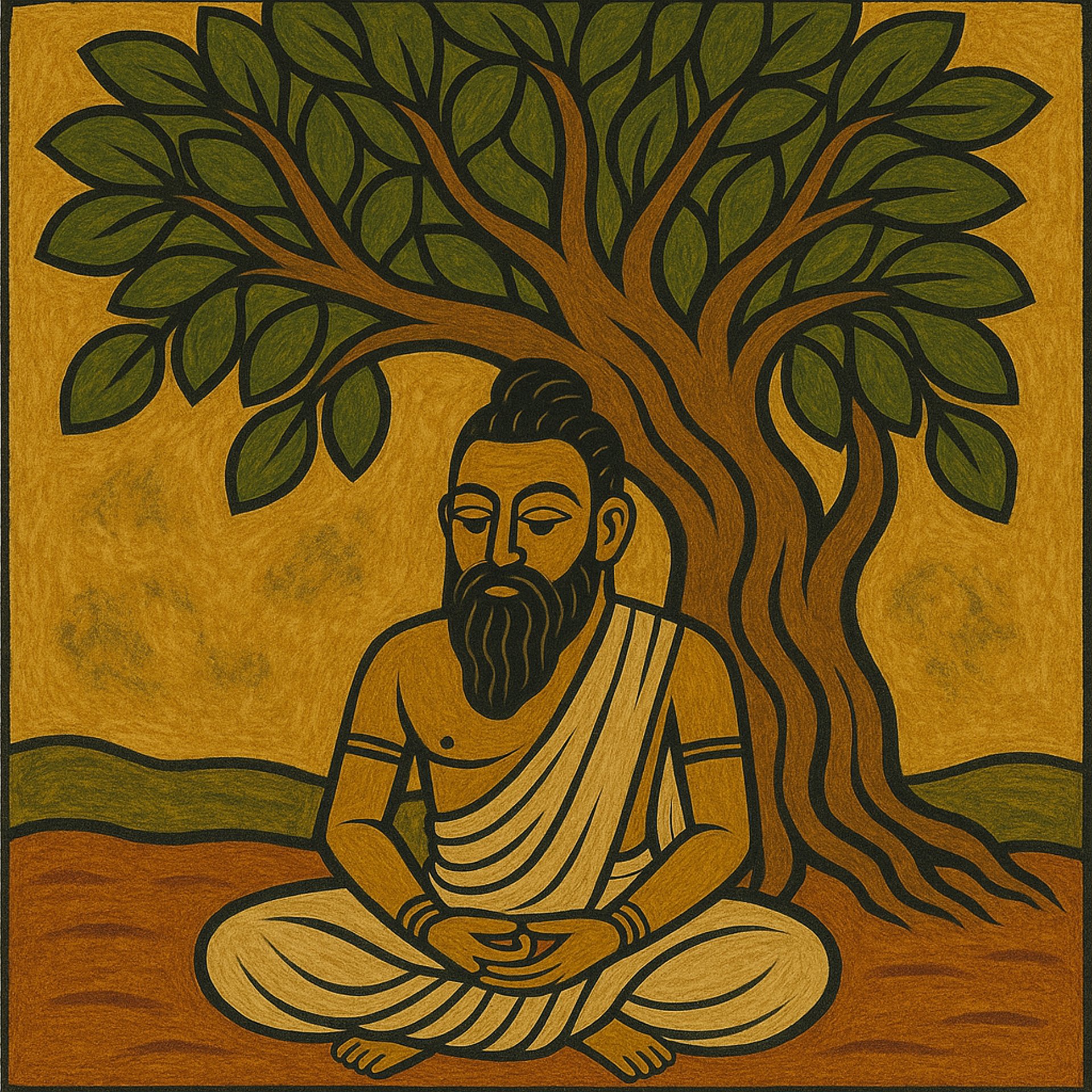
Thirukural is one of the greatest works of classical Tamil literature, written over 2,000 years ago by the poet Thiruvalluvar.
“Thiru” means “respected/sacred” and “Kural” means a short, concise verse.
Each Thirukural is a couplet, i.e., a two-line poem consisting roughly 7 words.
The collection comprises of 1330 couplets (Kurals), and is structured into 133 chapters, each containing 10 Kurals. These chapters are further grouped into three fundamental sections:
Aram (Virtue) – Principles of moral living and righteousness
Porul (Wealth) – Guidance on leadership, society, and governance
Inbam (Love) – Exploration of human emotions and relationships
Despite its ancient origins, its wisdom remains timeless and universally relevant.
Though only two lines each, it carries profound meaning offering insights into ethics, human behavior, and the art of living.
What makes the Thirukural extraordinary is its universality. It transcends religion, culture, and time.
Why I built this?
In third grade, I had to memorise a few Thirukural couplets along with their meanings for my Tamil exams. I remember finding it overwhelming; ancient Tamil, complex words and sentence structures, difficult spellings. It felt like a burden rather than something to look forward to, and I often wished it wasn’t part of the syllabus.
Fast forward a few years, I found myself in a discouraging environment where I was often put down and where people weren’t supportive. And out of nowhere, I remembered this kural:
“அகழ்வாரைத் தாங்கும் நிலம்போலத் தம்மை
இகழ்வார்ப் பொறுத்தல் தலை”
“As earth bears up the men who delve into her breast,
To bear with scornful men of virtues is the best”
- Kural 151
It definitely influenced how I responded to the situation. It stayed with me long after and that was the moment I truly understood the relevance of the Thirukkural. I was surprised by how something I once struggled to memorise could suddenly feel so deeply relevant to life.
Years later, in 2024, I was exposed to the teachings of Marcus Aurelius on Stoicism, and The Art of War by Sun Tzu. I learned how these works are actively used by corporate leaders, strategists, athletes, psychologists, military thinkers, and even in everyday decision-making and personal development.
That’s when I began to reflect; why isn’t the Thirukural spoken about in the same way?
Because it too is a vast collection of wisdom covering topics like ethics, morality, family life, leadership, governance, economics, love. Yet it hasn’t received the same global reach as many international philosophical works.
There might be other such Indian works of wisdom too. But Thirukural is the one I have grown up with, connected to, and truly understood over time. I want more people to experience its relevance the way I eventually did.
This passion project is a small step toward that.
This platform is dedicated to making the Thirukural:
Accessible – Easy to explore and understand
Relevant – Connected to modern life and real-world situations
Inclusive – Available in multiple languages and interpretations
Whether you are discovering the Thirukural for the first time or revisiting its wisdom, this space is designed to help you engage with it meaningfully.